
A new placement, not a new set of rules
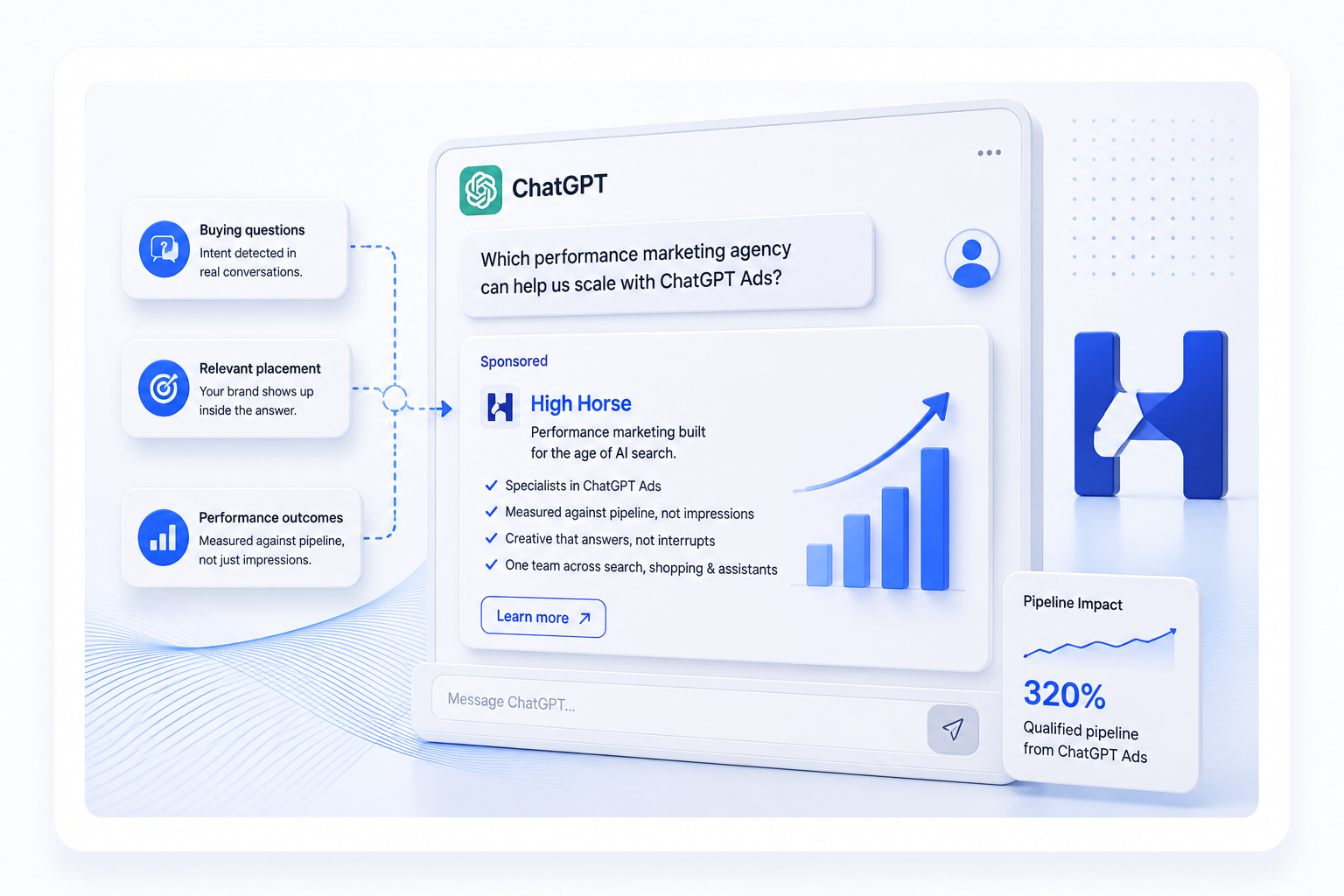
Assistant traffic behaves differently from a results page. Intent arrives mid-conversation, sessions are longer, and a single answer can end the search. Most teams either ignore the channel or treat it like display inventory.
We run it as performance media: measured against pipeline, not impressions.
The channel is young. The mistakes are already predictable.
Four problems account for most of the wasted spend we see when we take over an existing account.
Intent is buried mid-conversation
The commercial moment is rarely the first message. Targeting the opening question wastes most of the budget.
Attribution does not look like search
Sessions are long and often end off-platform. Without a measurement plan agreed upfront, results become an argument.
Creative that reads like an ad gets ignored
A placement inside an answer has to be useful in the same sentence it sells. Repurposed display copy fails here.
It cannibalises what you already pay for
Run without controls, the channel buys clicks your brand search was getting for less. That needs watching from day one.
We already own the rest of your search demand
Four steps from first test to steady spend
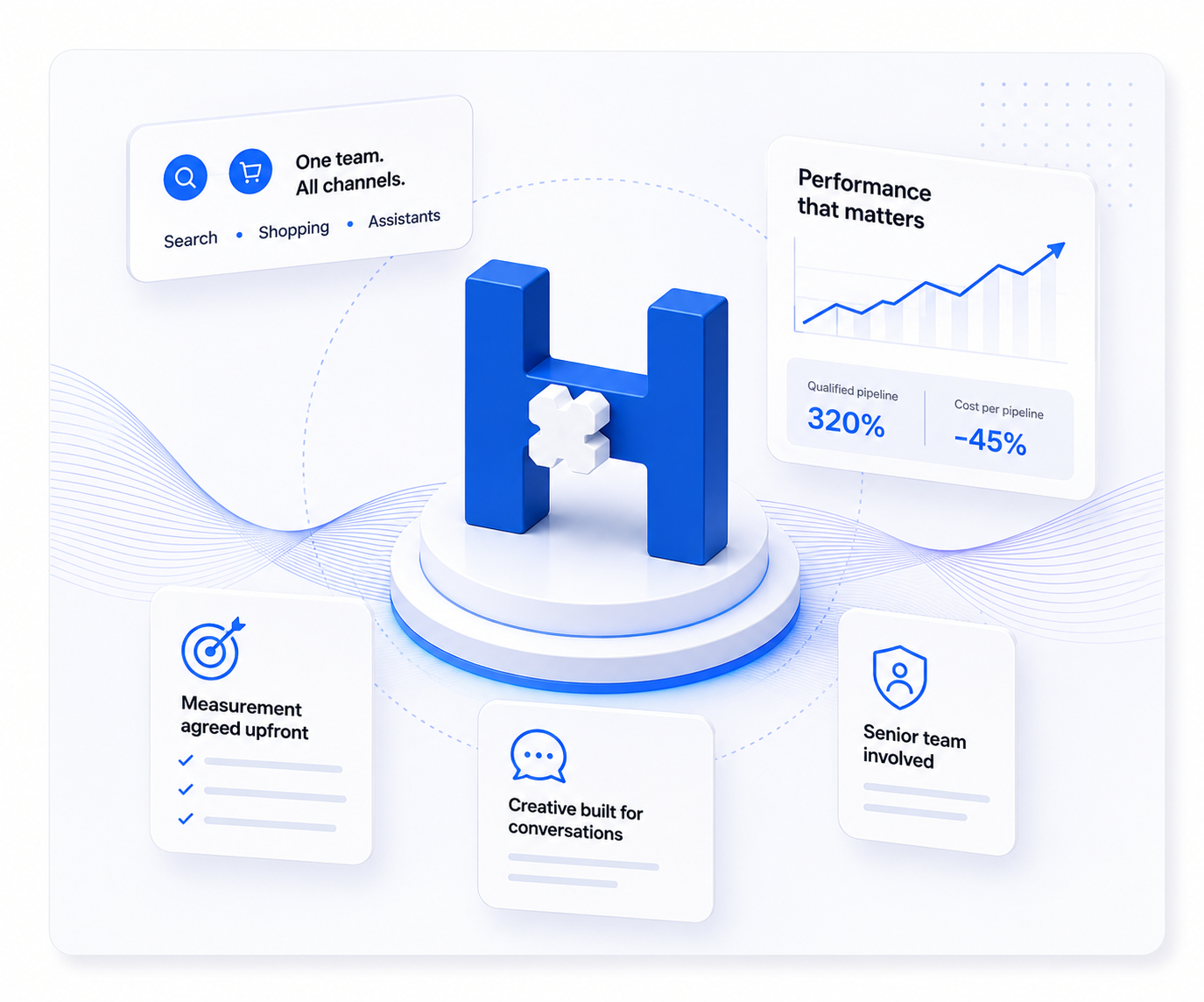
You see the numbers at every stage. Budget only scales when the unit economics hold.
What we report on
Tracked from campaign one
Benchmarked before you spend
Measured every month
Scoped before we launch
Availability depends on your market, category and objective, and the inventory is still changing. The first thing we do is confirm what you can buy today and what is worth waiting for, rather than selling you a package that does not exist yet.
Paid search buys a keyword at the moment of a query. This buys relevance inside a longer conversation, often earlier in the decision. The two overlap, which is why we run them together and watch for cannibalisation.
Enough to reach a readable result on two or three placement types, which we size from your existing paid search costs. We would rather scope a smaller test that answers the question than spread a large one thin.
We agree what counts as a result before launch and instrument for it, combining platform data with your own CRM or analytics. Where attribution is genuinely uncertain, we say so instead of claiming credit.
We stop, and we tell you why. The test is capped and the reporting is honest, so a negative result costs you a defined amount and leaves you with a clear answer.