
Types of Backlinks: Quality vs Quantity—What Matters More for SEO?
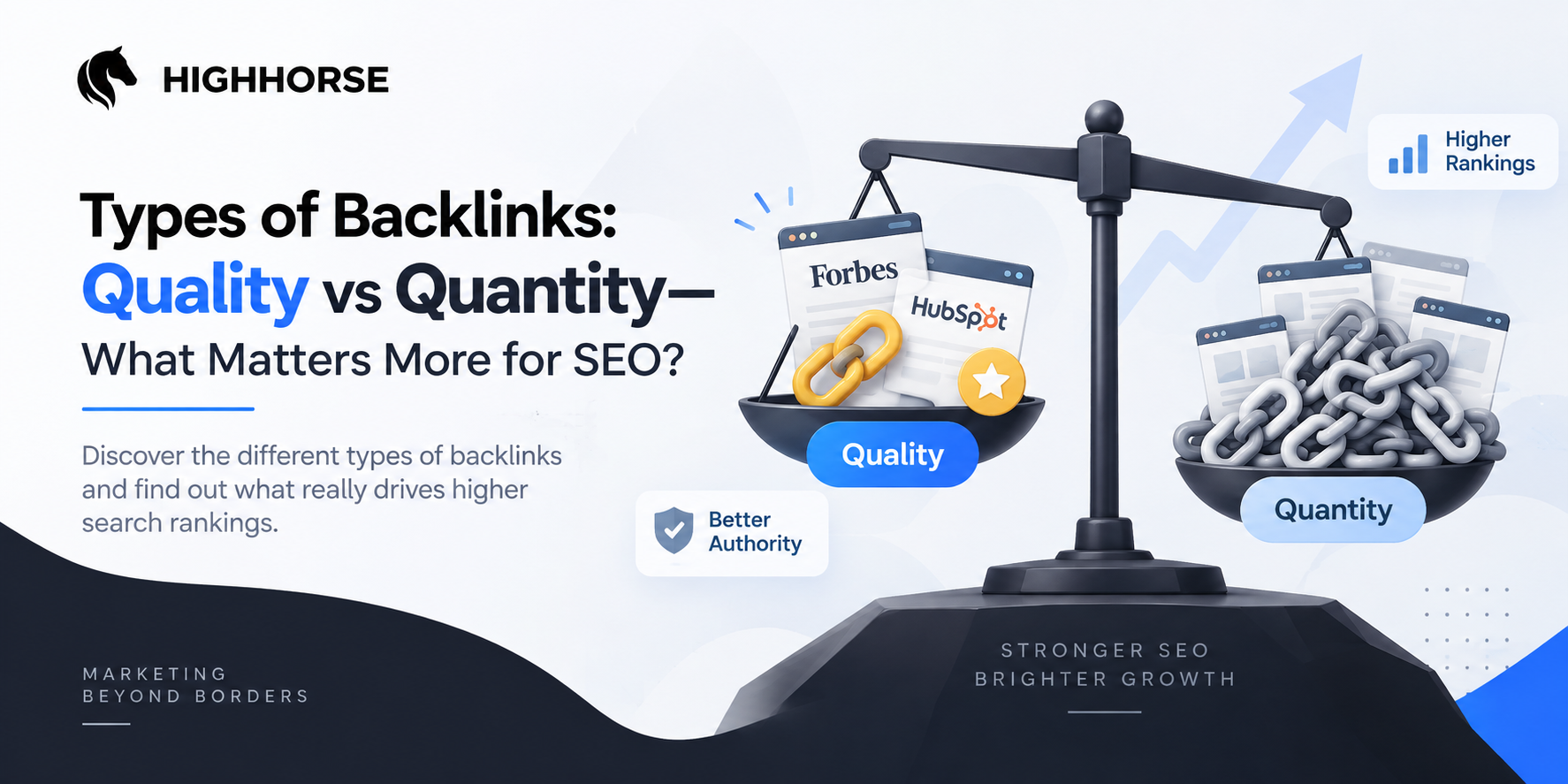
Build Fewer Links, Build Better Links: The Real SEO AdvantageBacklinks remain an important part of modern search engine optimization, but earning links is no longer about chasing the biggest possible number. A strong backlink profile combines relevance, authority, trust, and natural placement to help search engines understand a website’s credibility. This is why the debate around quality vs quantity backlinks matters for businesses investing in SEO marketing. Whether you are working on on page SEO, off page SEO, technical SEO, local SEO, or e-commerce SEO, your link building strategy should support the overall customer journey—not just increase a backlink counter. The right SEO backlinks can strengthen authority, support rankings, and help drive organic traffic, while large numbers of irrelevant or manipulative links may add little value.
Types of Backlinks: Know What You Are Building
There are several types of backlinks, and understanding their differences helps you create a safer and more effective backlinks strategy.
1. Editorial Backlinks
Editorial backlinks are naturally earned when another website references your content because it finds the information useful. These links are generally among the most valuable because they can demonstrate relevance, credibility, and genuine editorial interest.
Example: An industry publication links to your original research while discussing the same topic.
2. Guest Post Backlinks
Guest posting involves creating useful content for another relevant website and receiving a link where appropriate. The main objective should be providing value to the publication’s audience rather than producing articles solely to obtain links.
A well-planned guest posting campaign can support brand visibility, referral traffic, and a broader link building strategy.
3. Resource Page Backlinks
Resource pages collect useful guides, tools, studies, or websites around a particular subject. If your content genuinely adds value, you may be able to earn a mention from these pages.
These links work best when your resource directly matches the topic and offers something useful that the existing page does not already provide.
4. Digital PR and Content-Based Backlinks
Original research, expert commentary, statistics, surveys, case studies, and valuable industry resources can attract mentions from publishers and other websites.
This approach connects content marketing with link building SEO, because the content itself becomes the reason another website wants to reference you.
5. Local Business and Citation Links
For businesses targeting a specific geographical area, local directories, business listings, and relevant industry platforms can support local visibility. These links are particularly useful as part of a local SEO strategy when the listing is legitimate, accurate, and relevant.
Consistency in business information is also important across reputable local platforms.
6. Social and Profile Links
Links from social profiles, professional profiles, communities, and similar platforms can help people discover your brand. Many of these links may not provide the same SEO value as an editorial backlink, but they can still contribute to brand visibility and referral traffic.
The goal should be genuine presence—not creating hundreds of profiles simply to build links.
7. User-Generated and Forum Links
Links from forums, discussion platforms, comments, and communities can sometimes generate referral traffic or brand exposure when they are genuinely useful to the conversation.
Posting links repeatedly or adding irrelevant promotional comments, however, can look spammy and provide little long-term value. Always prioritize helping the user over placing a link.
8. Sponsored or Paid Links
Paid placements, sponsorships, and advertising relationships can generate visibility and referral traffic. However, paid links should use the appropriate link attributes and follow search-engine guidelines.
The important distinction is transparency: buying links specifically to manipulate organic rankings is very different from paying for legitimate advertising or sponsorship exposure.
Quality Backlinks vs Quantity Backlinks: Which One Wins?
The short answer is quality should come first, while healthy quantity and referring-domain diversity should support it.
A website with 500 backlinks from irrelevant, low-quality, or manipulative sources does not automatically have a stronger backlink profile than a competitor with 50 genuinely earned links from relevant websites. Search engines evaluate links in context, so simply increasing the number is not a reliable backlinks strategy.
Factor
Quality Backlinks
Quantity Backlinks
Source
Relevant and trustworthy websites
Often a large mix of websites
SEO Value
Usually stronger when naturally earned
Depends heavily on source quality
Relevance
Closely connected to your topic or industry
May include unrelated websites
Risk
Generally lower when earned naturally
Higher if links are created at scale or appear manipulative
Long-Term Value
Can support authority, visibility, and referral traffic
Number alone does not guarantee rankings
So, Does Quantity Matter?
Yes—but quantity should not be treated as the primary goal.
A natural backlink profile can contain many links from different websites, and earning links consistently over time can help a website grow its online presence. The problem starts when quantity becomes the objective and quality is ignored.
For example, 100 relevant links earned through useful content, partnerships, digital PR, and genuine industry mentions are very different from 100 links generated through unrelated directories, automated platforms, or spammy placements.
The strongest link building strategy is therefore not “quality versus quantity.” It is quality first + natural growth + diverse referring domains.